
Essential Checks Before First Use of a Liquid Nitrogen Tank
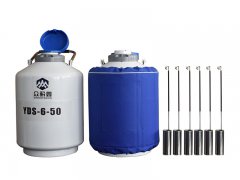
A new liquid nitrogen tank is not ready for immediate use straight out of the box. Proper inspection and preparation before the first fill are essential to ensure safety, protect valuable samples, and maximize the equipment's service life. Here is a step-by-step guide to the necessary checks.
Unpacking and Appearance Inspection
The first step is a thorough visual inspection. Carefully check the tank's outer shell for any dents, dings, cracks, or signs of collision damage that may have occurred during shipping. Even minor dents can compromise the critical vacuum insulation layer, leading to poor thermal performance and increased liquid nitrogen consumption.
Closely examine the vacuum exhaust port, which is typically located at the top or bottom of the outer shell. Ensure that this component is intact and undamaged. A damaged vacuum port is a direct path to vacuum failure, which will cause the upper part of the tank to frost over and dramatically accelerate liquid nitrogen loss.
Internal and Component Checks
Open the tank and inspect its interior. Check for any foreign objects, debris, or signs of corrosion on the inner vessel. Any contaminants found inside must be removed and the inner container cleaned to prevent corrosion that could damage it over time.
Examine the neck tube and the plug or lid. Look for any ice blockage in the neck tube and ensure the plug is in good condition without cracks and fits securely. For tanks equipped with pressure gauges, ensure the gauge reads zero when the tank is not pressurized. Also, verify that all safety devices, such as safety valves, are present and appear to be in good working order.
Pre-Cooling: An Essential Step Before the First Fill
A newly manufactured tank is at room temperature and should never be filled with liquid nitrogen rapidly. The extreme temperature difference can cause thermal shock, damaging the inner vessel and shortening the tank's lifespan.
The correct procedure is to pre-cool the tank gradually. This is done by first adding a small amount of liquid nitrogen, roughly 5 to 10 percent of the tank's total capacity, slowly into the container. Allow it to sit and boil vigorously for about 5 to 10 minutes until the boiling subsides. This process cools the inner chamber. If needed, pour out this initial nitrogen carefully and repeat the process once or twice to stabilize the internal temperature. After pre-cooling, the tank can be safely filled to its desired liquid level.
Post-Fill Verification
After the tank is filled, conduct a final check. Observe the outer shell for any signs of frosting or condensation. A healthy tank should remain dry and at room temperature on the exterior. If frost appears, especially around the neck or seams, it indicates a potential vacuum issue. Also, listen for any unusual hissing sounds that might suggest a leak.
Carrying out these checks, inspecting the exterior and interior, verifying component integrity, and performing a mandatory pre-cooling process, is the foundation for safe and reliable long-term use. Skipping these steps can lead to vacuum failure, rapid nitrogen loss, and damage to the tank. For any concerns identified during these checks, it is best to contact the manufacturer's technical team rather than attempting repairs independently. Proper preparation ensures that your new liquid nitrogen tank will provide years of dependable sample protection.
Relevant Information
- Why Do Liquid Nitrogen Containers Require Regular Liquid Level Checks?
- Liquid Nitrogen Tank Maintenance Guide: From Daily Checks to Long-Term Care
- The Vacuum Layer in Liquid Nitrogen Tanks: Invisible but Essential
- Liquid Nitrogen Tank Maintenance Guide: From Daily Checks to Long-Term Care
- Inspection work before using Panchao liquid nitrogen tank
- liquid nitrogen container supply before Chinese New year Holiday

Latest Products
- 110m3 double wall cryogenic Liqu
Cryogenic Liquid Tanks are available in vertical or horizonta...[more]
- 2vertical stainless steel pressu
Cryogenic Liquid Tanks are available in vertical or horizonta...[more]
- 310 cubic meters cryogenic Liqui
Cryogenic Liquid Tanks are available in vertical or horizonta...[more]
- 4GB150 pressure vessels cryogeni
Cryogenic Liquid Tanks are available in vertical or horizonta...[more]
- 5New double Vertical cryogenic L
Cryogenic Liquid Tanks are available in vertical or horizonta...[more]
Rankings Of Similar Articles
- Why Do Liquid Nitrogen Containers Require Regular Liquid Leve
- Liquid Nitrogen Tank Maintenance Guide: From Daily Checks to
- The Vacuum Layer in Liquid Nitrogen Tanks: Invisible but Esse
- Liquid Nitrogen Tank Maintenance Guide: From Daily Checks to
- Inspection work before using Panchao liquid nitrogen tank
- liquid nitrogen container supply before Chinese New year Holi
Latest Information
- Does Frost on the Outside of a Liquid Nitrogen Tank Always In
- Why Liquid Nitrogen Dewars Should Not Be Stored Empty Long-Te
- How to Understand the Static Evaporation Rate of a Liquid Nit
- Aluminum Alloy vs. Stainless Steel Liquid Nitrogen Tanks: Adv
- The Cooling Principle of Liquid Nitrogen Tanks: How Do They M
- The Vacuum Layer in Liquid Nitrogen Tanks: Invisible but Esse
- Holiday Notice
- Storage Environment Requirements for Liquid Nitrogen Tanks: T
- Hot sale thawing cup
- Storage of liquid nitrogen tank
